

The best makeup for a green dress is warm gold or bronze on the eyes paired with a nude lip, because the warmth pulls out the yellow undertone in emerald or forest shades where silver turns skin sunken in photos.
That pairing wins for most occasions, but anyone after full drama or a matte Instagram finish will find it too quiet.
The real cost is the undertone choice: cool silver against green is the specific mistake that flattens everything out, and I learned that the hard way in wedding photos where my eyes disappeared against the fabric.
1. Barely-There Elegance
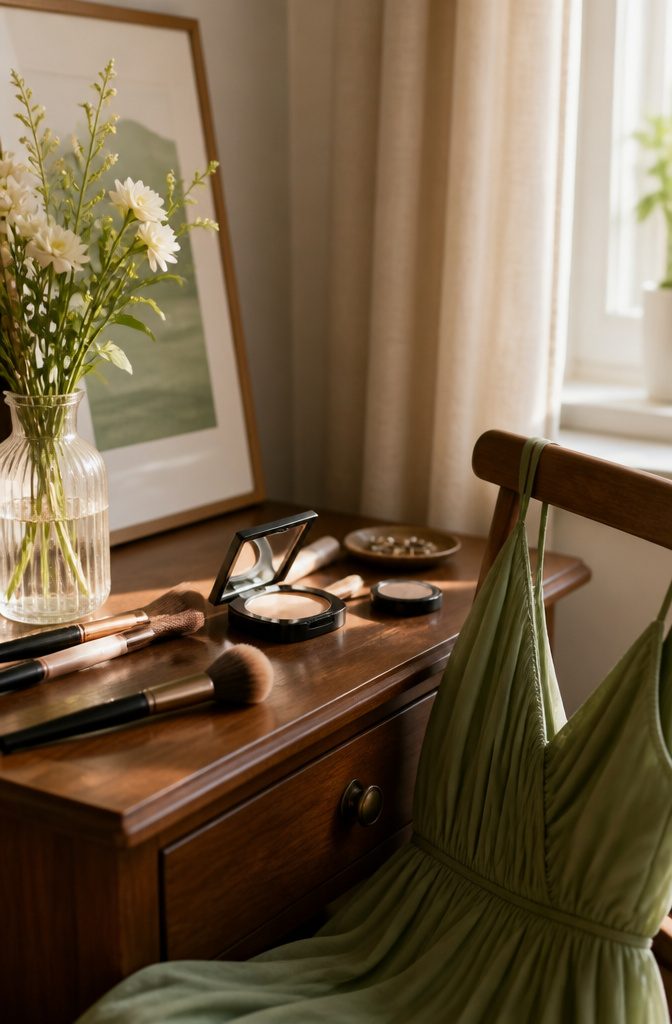
A lightweight, dewy foundation or tinted moisturizer lets your skin read as skin, not a mask. That breathable glow is the whole point: the green dress does the heavy lifting, and your face stays in the conversation without shouting.
Eyes stay quiet with a sweep of nude or light earthy shadow, just enough to add depth, plus a touch of mascara so your lashes look like yours, only slightly more awake.
Clear gloss or a soft pink-nude lipstick finishes it. This is the move for daytime events and casual gatherings, anywhere you want to look polished without looking like you tried.
The catch? If your brows are sparse or uneven, this look will show it.
Lightly fill and shape them or the whole thing goes flat. Anyone after drama or definition should skip this route entirely; barely-there reads as unfinished on someone who needs more structure to feel like themselves.

CREAM-TO-POWDER SHIMMER FINISH WITH ALL-DAY HOLD: Starts as a silky, pigment-rich cream and sets to a luminous shimmer powder that stays crease-free and fallout-free —delivering glowing, dimensional shimmer lid color that truly lasts.

Intensely Versatile - Transform your look with a curated blend of 9 luxurious shades that shift effortlessly from a soft daytime glow to a dramatic nighttime allure. Enjoy seamless blending for a finish that adapts to every style with precision.

Dual-Color Reflective Magic: This holographic glitter eyeshadow palette features a high-pigment formula with rich, vibrant base colors that apply effortlessly. Topped with floating diamond-like shimmer, it creates a mesmerizing duochrome effect, adding dimension and sparkle to your eyes. Perfect for bold, head-turning looks that shine from every angle
2. Polished Professional
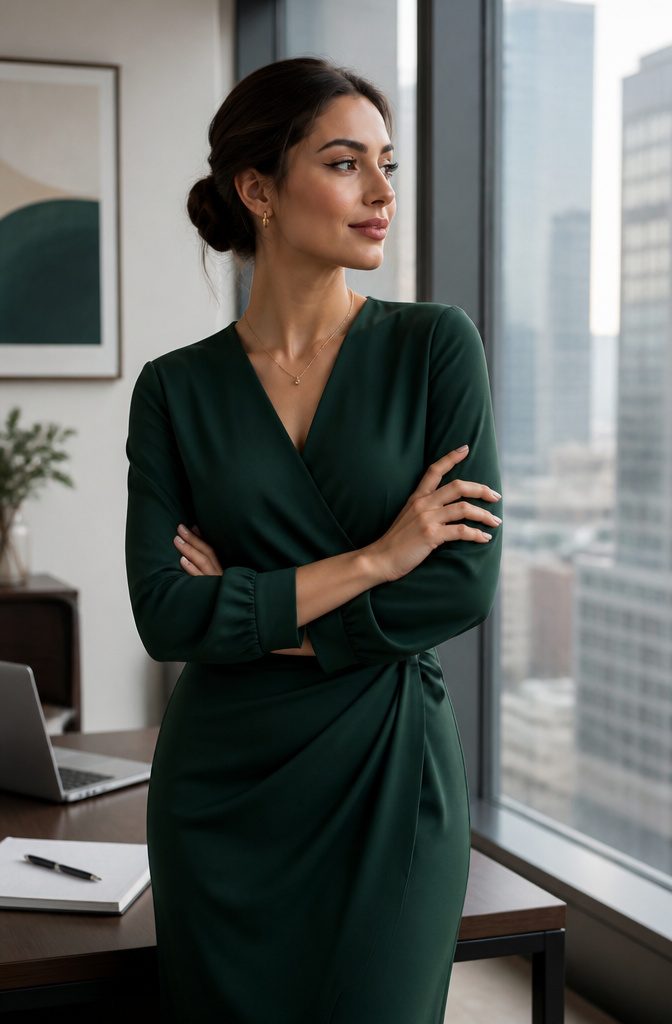
Medium-coverage foundation with a satin finish reads as skin that happens to look good, not makeup trying to convince anyone.
That is the backbone of this look. I pair it with concealer just where darkness collects, usually under the eyes and at the corners of the nose, because the satin finish only works if the canvas is even.
Eyes stay in the taupe family.
Soft browns layered from lash line to crease add dimension without registering as eye shadow from across a conference table. A thin winged liner, drawn with a light hand, sharpens the gaze just enough.
Peach or rosy blush brings the face back to life after foundation flattens it. The warmth matters against green; cool cheeks turn the whole thing costume.
Muted rose or mauve on the lips strikes the balance this look needs: present, not loud. It transitions cleanly from office to dinner, which is why the sources flag it for office parties, semi-formal luncheons, early evening events.
The catch is who this disappoints.
Anyone after full coverage or a matte Instagram finish will find this too quiet, almost apologetic. The drama lives elsewhere in this article.

Butter Gloss: Buttery soft and silky smooth, our decadent Butter Gloss is available in a wide variety of sumptuous shades; Each glossy color delivers sheer to medium coverage that melts onto your lips
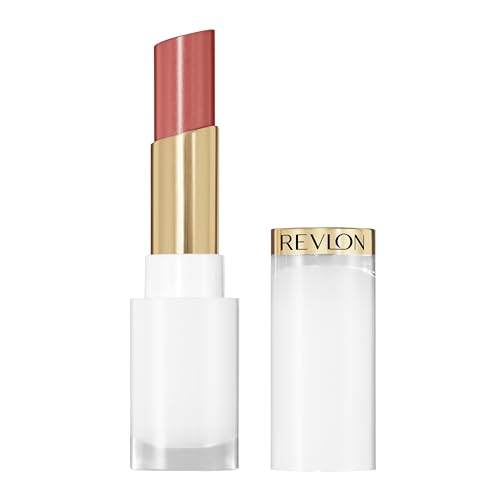
2025 ALLURE BEST OF BEAUTY AWARD WINNER: Drench your lips with sheer, shiny color in just one swipe. It’s been a viral sensation for a reason.

0.10-ounce tube of Neutrogena Hydro Boost Moisturizing Tinted Lip Gloss in color True Nude, for a boost of hydration, available in a variety of vibrant and luminous lip colors
3. Classic Glamour
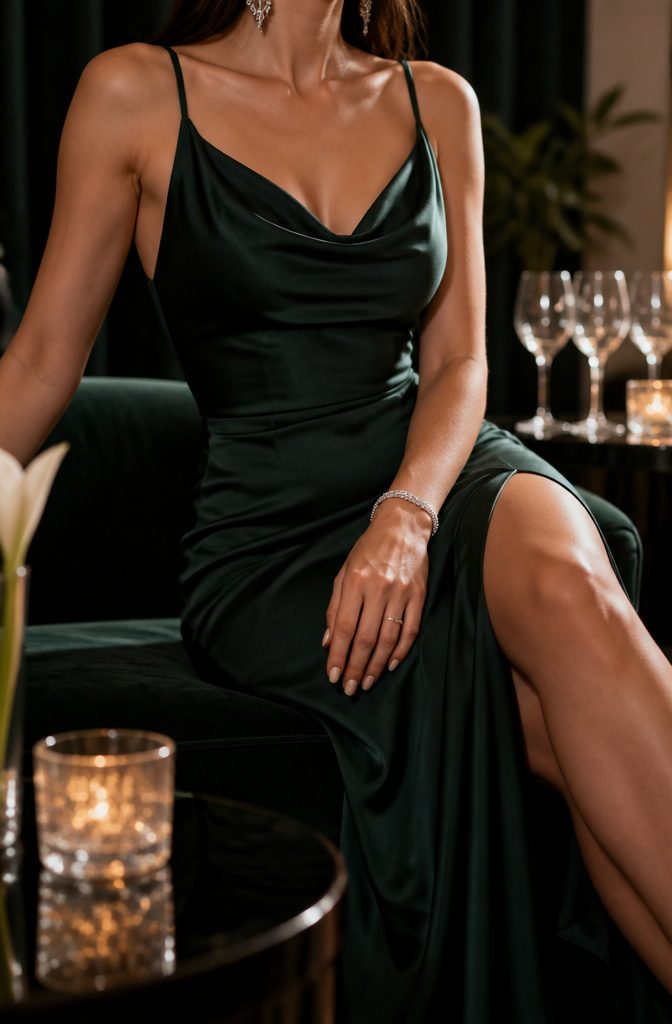
Full-coverage matte foundation reads formal the instant it hits the skin, which is exactly what classic glamour asks for. The sources build this look on that refined canvas, adding contour for definition and keeping the brow bold yet natural.
Eyes get the drama: classic black eyeliner or smoky shadows, with a touch of gold or bronze shimmer at the inner corners to keep it from looking funeral.
The lip is where opinion splits.
One source reaches straight for classic red or berry; another warns that bold red against green risks Christmas-card territory and pushes toward burgundy or wine instead. Both agree the darker direction wins.
This suits cocktail parties, formal receptions, evenings when you want to read as timeless rather than trendy.
Where it tips overdressed is daytime events with natural light hitting that matte base hard, or anywhere the dress itself is already doing ornate work. If the green is sequined or heavily constructed, the full face competes instead of complements.

MAC Eye Shadow Refill

A highly pigmented powder that applies evenly and blends well.

These high-definition, natural nude shades are super long lasting and leave your skin feeling radiant
4. Bold and Beautiful
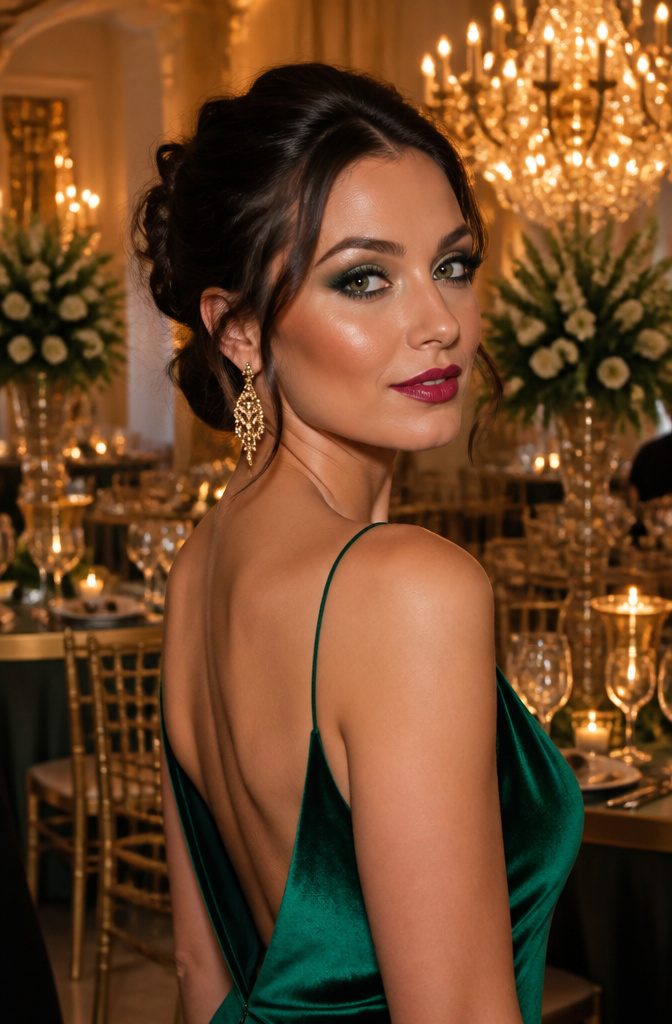
Radiant makeup with bold eyeliner and smoky eyes in jewel tones turns a green dress into a backdrop for something theatrical.
The first time I tried this, I paired a teal cat-eye with contoured cheekbones and a striking berry lip for an evening wedding.
The highlight caught the candlelight exactly where it should, but the lip fought the eye for attention until I softened it to a neutral.
One feature gets the drama, the other steps back: that is the rule that keeps this from looking like costume.
Smoky eyes in emerald or metallic jewel tones work for galas and formal receptions where the room itself feels dressed up.
Daytime minimalism can handle a single bold element, maybe a defined brow and one sweep of liner, but the full construction, contour plus highlighter plus dimensional cheek, needs evening formality to feel right.
Without the occasion behind it, the look wears you instead of the other way around.


Creamy Hydrating Lipstick: Color Sensational Romantic Rose is a rich, creamy pink lipstick. Formulated with Shea Butter, it leaves behind a sensuous feeling and a creamy finish for smooth, supple lips, with no feathering or bleeding

Microblading Ink - Cool and muted, Victorian Rose is an ageless mauve tattoo ink. Quickly becoming a classic, it is perfect for permanent lip blush, lip color, and tattoo makeup application.
5. Light Green Dresses
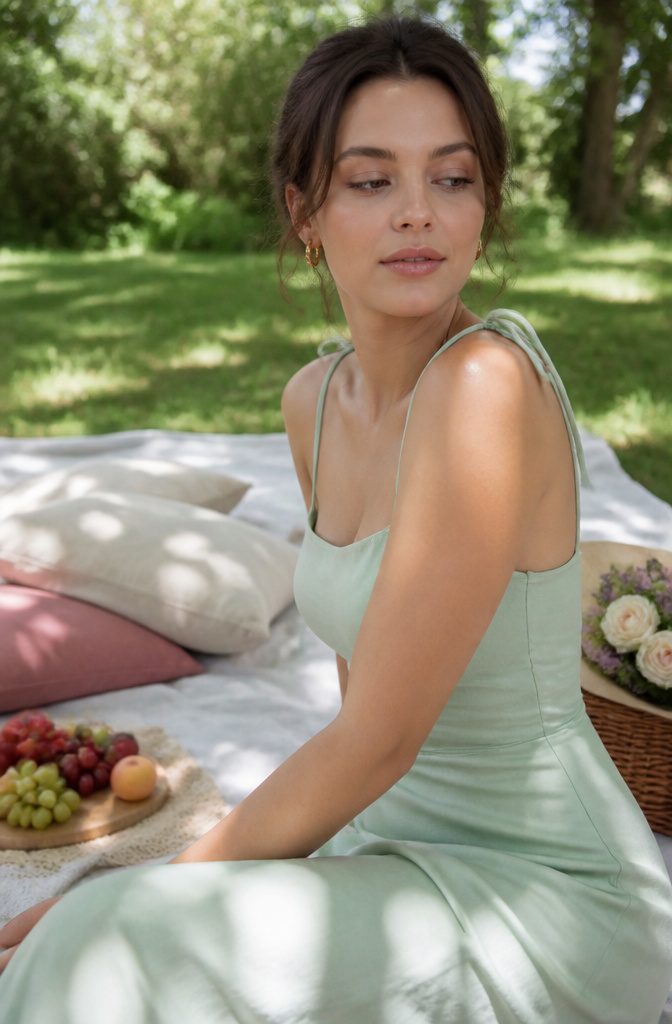
Pale mint and pale green dresses read as almost-neutral, which means the makeup has a narrower margin before it starts looking like too much.
A nude lip with a clear or barely-pink gloss keeps the balance on the right side of that line; anything berry or brick drags the whole look toward Christmas, and not in a useful way.
For eyes, a single sweep of light earthy shadow, something in the beige or soft taupe family, plus a touch of mascara on the upper lashes only, keeps the face from competing with the dress’s quiet color.
Skin should look like skin. A tinted moisturizer or dewy foundation that lets actual texture show through works better here than full matte coverage, which can turn chalky against a cool pastel.
The paler the green, the more any strong lip color feels like a costume choice. If the dress is closer to sage or seafoam, you have slightly more room.
A soft coral or pink lip can work there, though I would still default to nude first and add color only if the occasion asks for it.
Daytime events, outdoor weddings, and casual gatherings are where this light-handed approach wins; anything after dark probably deserves a deeper dress color anyway.

No Smudge Black Liquid Eyeliner: This waterproof eyeliner features an ultra fine tip that delivers the most defined, precise line and stays put on your eyelid for up to 12 hours with whatever look you're working

SOFT KOHL FORMULA: Infused with Vitamin E and Caffeine for a long-wearing formula that hydrates and conditions your lids plus adds a caffeine boost to reduce puffiness and redness
6. Dark Green Dresses
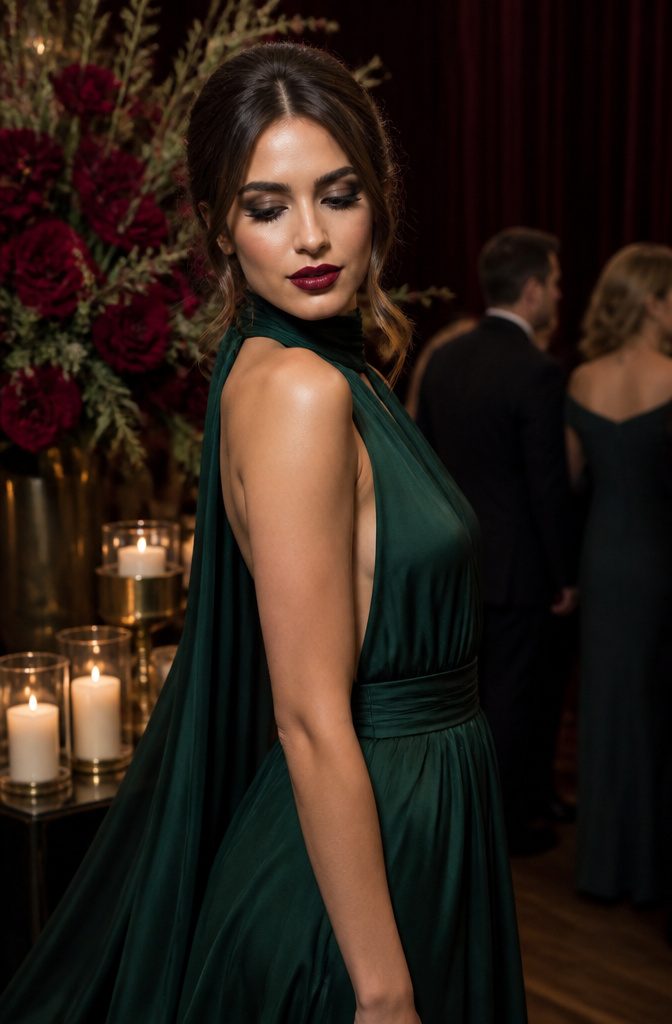
Dark green carries a weight that demands something from your makeup. A forest or emerald shade already reads as evening, as occasion, as deliberate drama.
Pair it with a bold lip in deep purple or burgundy and the whole look holds together rather than pulling apart. The lip gives the face its own gravity, matching what the dress is doing below.
For eyes, a smoky build of black, gray, and silver keeps the same register. The sources lean toward full drama here, though one suggests pulling back to something more subtle if you want the dress to dominate.
Both work, but the heavier eye is what actually answers the dress’s depth. A whispered smoky eye beside a saturated dark green can feel accidental, like you dressed for one party and made up for another.
The balance is between complementary and competitive.
Dark green doesn’t need enhancement so much as it needs an equal. That is the judgment call: go rich enough that the makeup and the dress are having the same conversation, or the dress ends up talking to itself.

【Flattering Shades for Every Skin Tone】 Each stick is thoughtfully crafted in rich, smoky tones that flatter all complexions. From warm neutrals to deep charcoals, these pigmented shades enhance your eyes and add instant dimension with minimal effort.

Multicolor:Eyeshadow palette has a variety of bright colors for you to choose from,you can easily mix and match colors,reasonable color matching,and eyeshadows with high pigmentation will make your eye makeup look more lustrous

【Rich Pigment & Versatile Shades】Featuring an array of multi vivid shades including black, white, brown, purple, green, and beige, this pressed powder eyeshadow palette is designed for crafting stunning eye makeup looks that range from subtle to bold. Each shade is highly pigmented for impactful color that draws attention
7. Sea Green Dresses
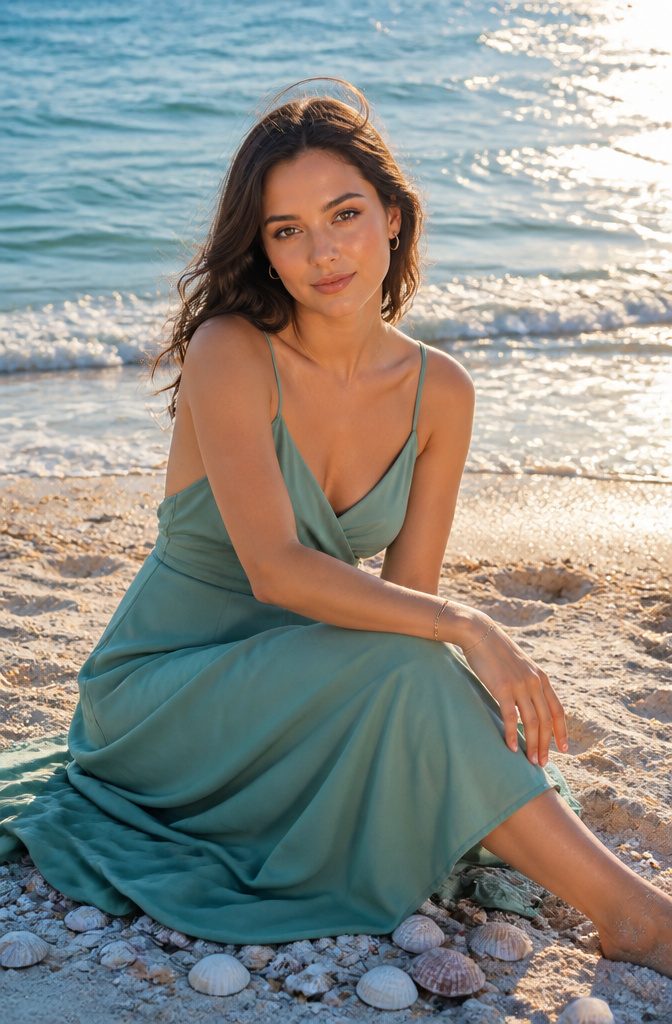
Sea green carries a particular coastal quietness, the kind of grayed-down green that looks like it was pulled from tide pools rather than a garden.
That muted quality is what makes the shade forgiving on skin, but it also means metallic makeup can read as either inspired or off-key depending on the undertone you choose.
For natural makeup, nude lips and a wash of light eye color keep the look anchored in the same soft register as the dress.
The sources point to beach weddings and summer events as the natural home for this pairing, which tracks; the combination reads effortless rather than underdone.
But the specific recommendation that stands out is the shimmer option: gold or silver on the eyes, catching the gray undertones that separate sea green from its brighter cousins.
Gold warms the gray into something sunlit, while silver pushes the coolness further, toward overcast water. Silver works when you want the metallic to feel like an extension of the dress itself; gold works when you want contrast.
Both keep the overall effect in the same tonal family, which is the difference between makeup that complements sea green and makeup that competes with it.

Nourishing Hybrid Formula: This lip gloss and balm hydrates with a high shine finish and sheer, buildable color with no stickiness. A vegan product that leaves lips feeling softer, smoother, and more hydrated, instantly and over time.

HYDRATING SHEER COLOR TINT: A 2-in-1 lip balm formulated with vitamin E to help condition and soften lips, while adding a sheer tint of color and soft lip shine.

Hydrating Lip Gloss for Sensitive Lips - ShineOn is a gloss with the comfort of a lip balm that delivers serious shine without the stick. Safe for sensitive skin and lips, it's free of plumping agents, fragrances, and anything that stings. Just pillowy soft, glossy lips!
8. Olive Green Dresses
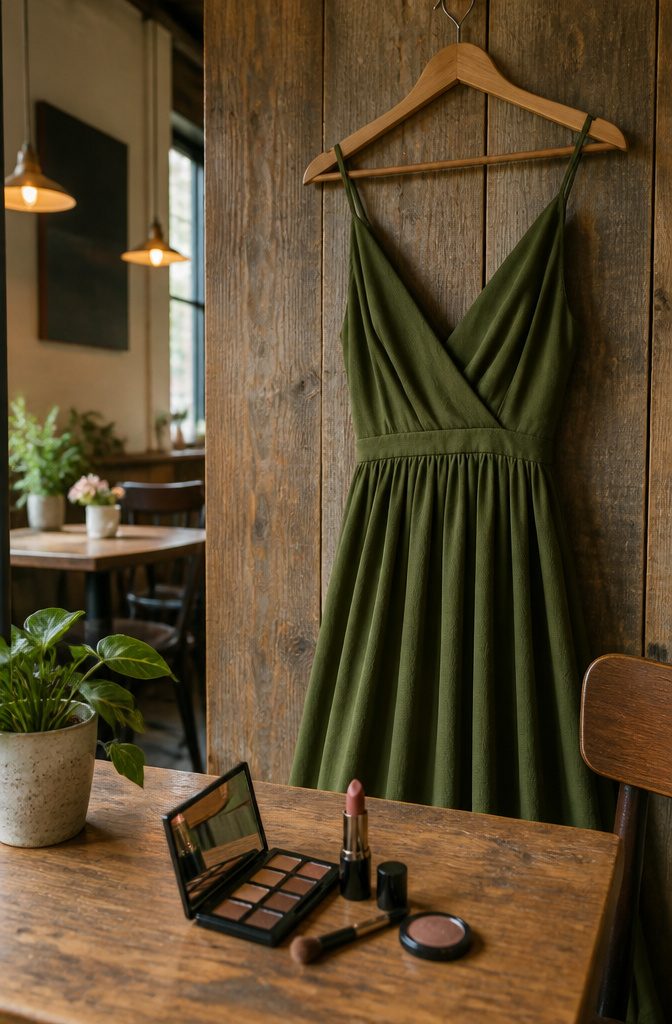
Olive green carries a warmth that shifts the whole neutral palette in your favor.
Where emerald or forest green can turn beige lip colors flat and chalky, olive’s yellow undertone lets nude lip colors in beige or purple read as intentional rather than washed-out.
The same warmth means brown or copper eyeshadows do not compete with the dress; they echo it. I have seen cooler greens swallow a copper eye whole, but on olive fabric the shadow registers as depth and light together.
The move is to keep the lip simple and let the eyes carry the conversation, which also happens to be the fastest way out the door when the dress already did the choosing for you.

【Vibrant Color Selection】Choose from 14 stunning shades, including 9 mattes (Snow, Gray, Spicy, Forest, Sea, Blue Sky, Dark, Buff, Coffee), 2 soft shimmers (Blue Spark, Tapestry Taupe), and 3 high-shine glitter shades (Moonlight, Saturn, Glass), perfect for daily wear, festivals, and performances.

Single color pans you'll actually use and love
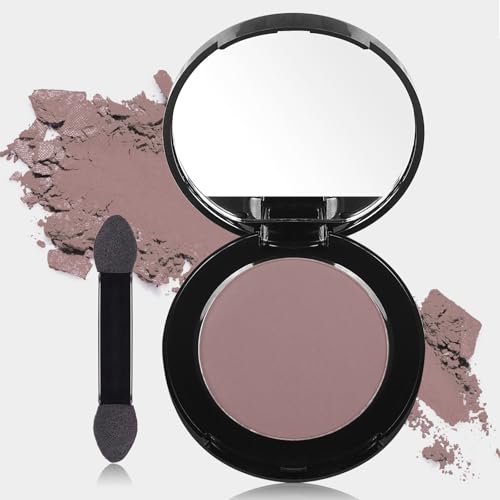
Vibrant Color Range: MEICOLY offer a diverse range of shades for eyeshadow,including off white(beige) eyeshadow,white,black,blue,light blue,green,coffee(brown),red,macaron grey,violet,forest green,taupe,champagne,beige brown eyeshadow,catering to various preferences and allowing you to find your perfect match.All MEICOLY matte eye shadow come with mirror and brush.Gently remove the sealing film from the mirror before using the eyeshadow.
9. Orange to Skip
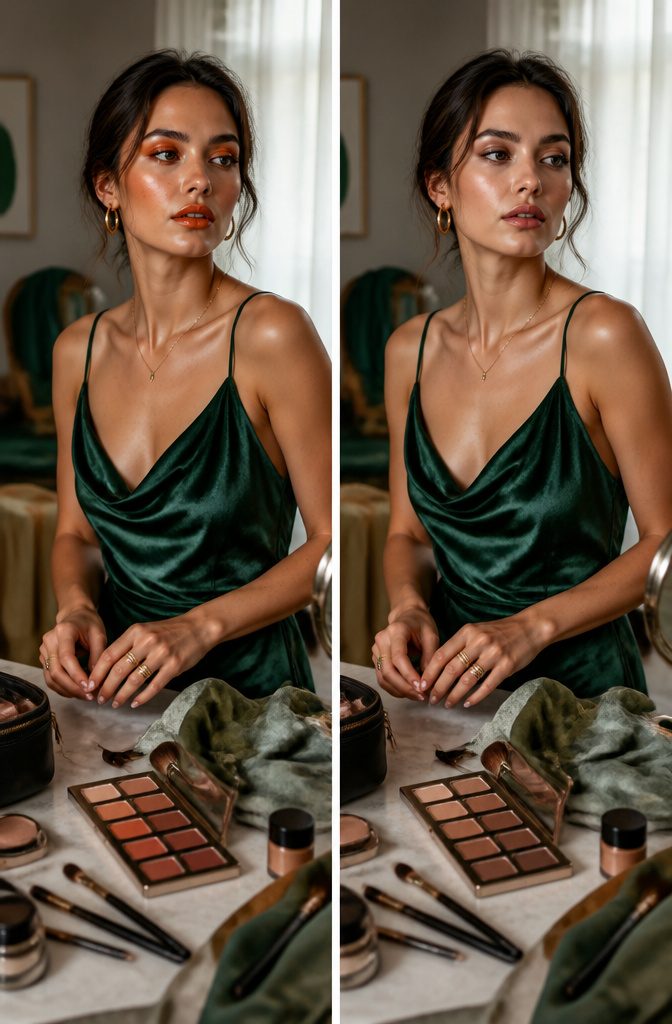
Orange sits opposite green on the color wheel, which makes them fight for attention instead of working together.
Lipsticks that lean even slightly orange turn brassy against emerald or forest tones, and the clash only intensifies under warm bathroom bulbs where the mirror flatters everything.
Restaurant candlelight is worse. It throws amber across the face already, so any orange pigment in your blush or shadow merges with the ambient glow and reads as muddy terra-cotta against the dress.
Skip orange entirely on lips and eyes if you want the green to read as intentional rather than accidental.
Peach, which hovers near orange, can work in daylight but drifts into the same problem after dark, so I treat it with the same caution.

Full coverage, lasting color.

2-IN-1 CRÈME TO POWDER CREAM BLUSH STICK: This convenient 2-in-1 blush sticks instantly give a flush of soft color to lips and cheeks, no brushes required!

Buildable & Blendable: Achieve the ultimate blurred matte look with Cloudtopia Cheek and Lip Mousse. This air-light cream blush mousse melts onto the skin to create a soft-focus, velvety finish that visibly blurs imperfections for flawless complexion
10. Blue to Handle Carefully
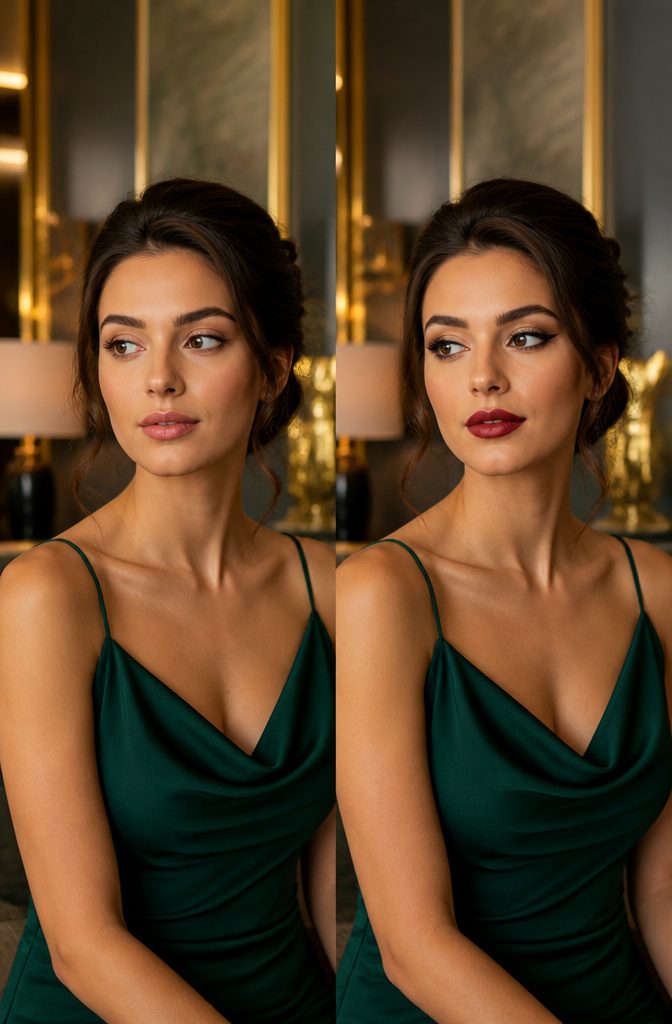
Blue eye shadow with a green dress is the pairing I keep seeing go wrong in bathroom-mirror selfies, and the reason sits right on the color wheel.
Blue and green sit too close together to play nicely unless you force a real gap between them.
A navy liner against a lime green dress works because the distance is deliberate; a sky-blue shadow against sage just turns everything muddy, like two paints bleeding together on wet paper.
Most blue eye makeup fails here because the shades people reach for are mid-tone: dusty blues, teals, anything that sits in the comfortable middle.
Those middle blues fight with every green that isn’t already navy itself. The contrast has to be stark, almost jarring, to read as intentional rather than accidental.
I keep navy liner in my kit for this exact narrow exception, but I have passed on every periwinkle and cornflower palette when I know the dress is green.
The risk of looking like you tried to match and missed is too high for the payoff.
11. Too Much Green
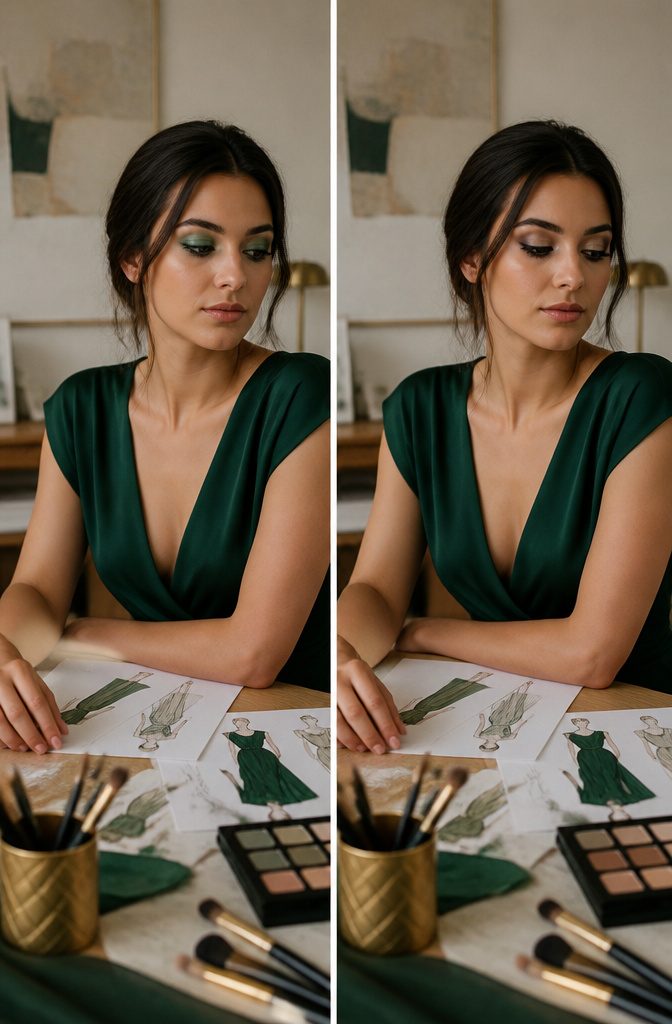
Green eyeshadow in a tone close to your dress dissolves the boundary between face and fabric.
The eye loses the place where one stops and the other starts, and instead of framing your features you end up looking like a single undifferentiated block of color.
Matching too closely is the specific mistake that flattens everything out, because the eye needs contrast to read shape.
The alternative is cleaner. For a dark green dress, sources point toward gold or bronze on the lid, or else beige and champagne if you want the eye area to stay light.
With a light green dress, the same principle flips: smoky grays or a defined black liner give the face structure instead of letting it bleed into the dress.
The dress is already doing the green work. Your makeup’s job is to give the face its own territory.
Color Play and Harmony
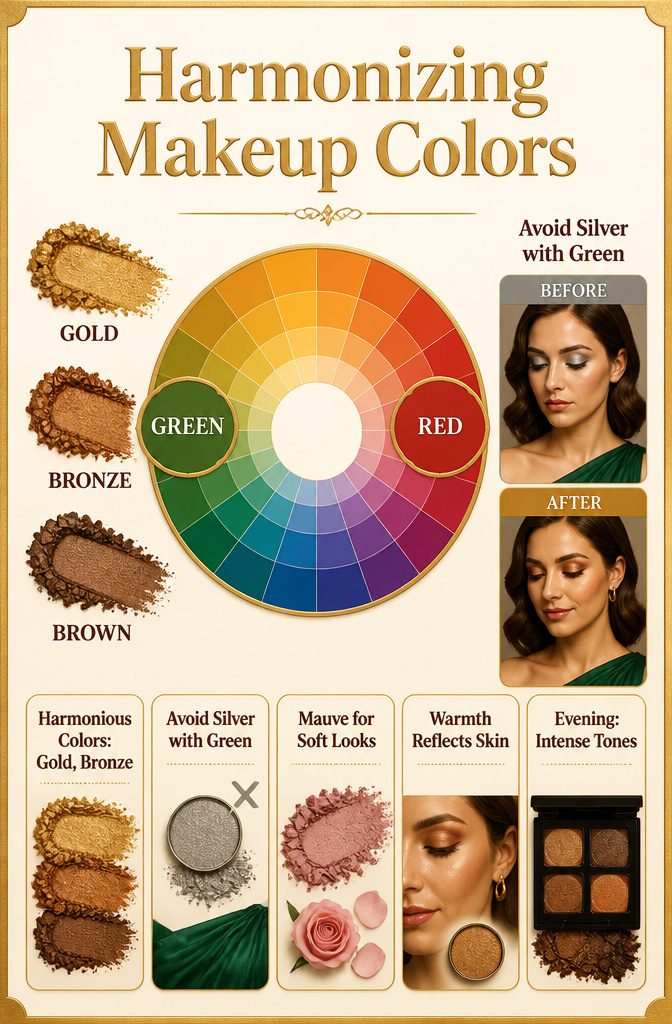
Green sits opposite red on the color wheel, which means warm earthy tones like gold, bronze, and brown create natural harmony rather than competition.
The pairing reads as intentional, not accidental. I learned this the hard way after trying a cool silver shadow with an emerald dress and watching my eyes look sunken in every photo.
The warmth of gold or copper reflects back into the skin in a way that silver simply doesn’t.
Mauve and softer pink tones work a different angle. They pull the makeup toward a gentler register, useful when the dress itself is doing the heavy lifting or when the occasion calls for something less assertive.
The same green dress can read cocktail-ready or Sunday brunch depending on whether you reach for bronze or blush.
The choice between warm and cool comes down to the mood you want to set.
Lean into golds and rich browns for a grounded, evening weight. Drift toward mauve and rose when you want the look to feel approachable and light.
Event Vibe
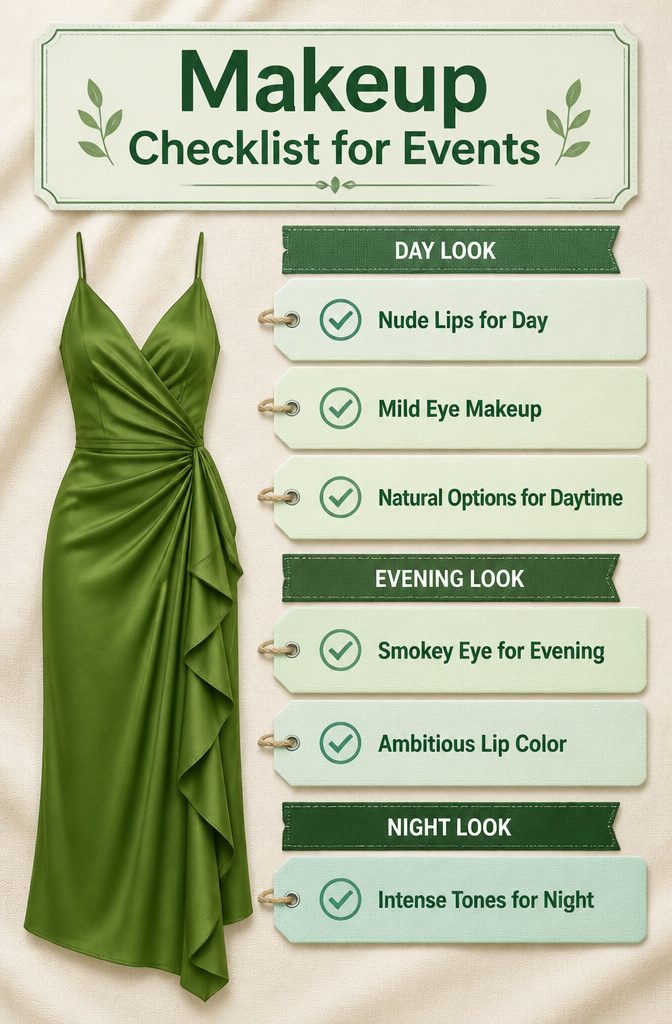
The same green dress moves from brunch to evening with nothing but a makeup swap. Daylight hours call for nude lips and mild eye makeup, a look that reads as pulled-together without competing with your coffee and sunlight.
For a formal occasion, the same dress shifts into something else entirely: an ambitious lip color along with smokey eye makeup using shades of brown and gold.
Evening asks for deeper, sultry tones with a more polished or shimmery finish; daytime wants lighter, more natural options.
The dress does not change. What changes is whether you lean into the herbal, barely-there register or build toward intensity that holds up under dimmer light and closer conversation.
Time of day often dictates the makeup’s intensity and finish more than the dress itself ever could.
Mood and Persona
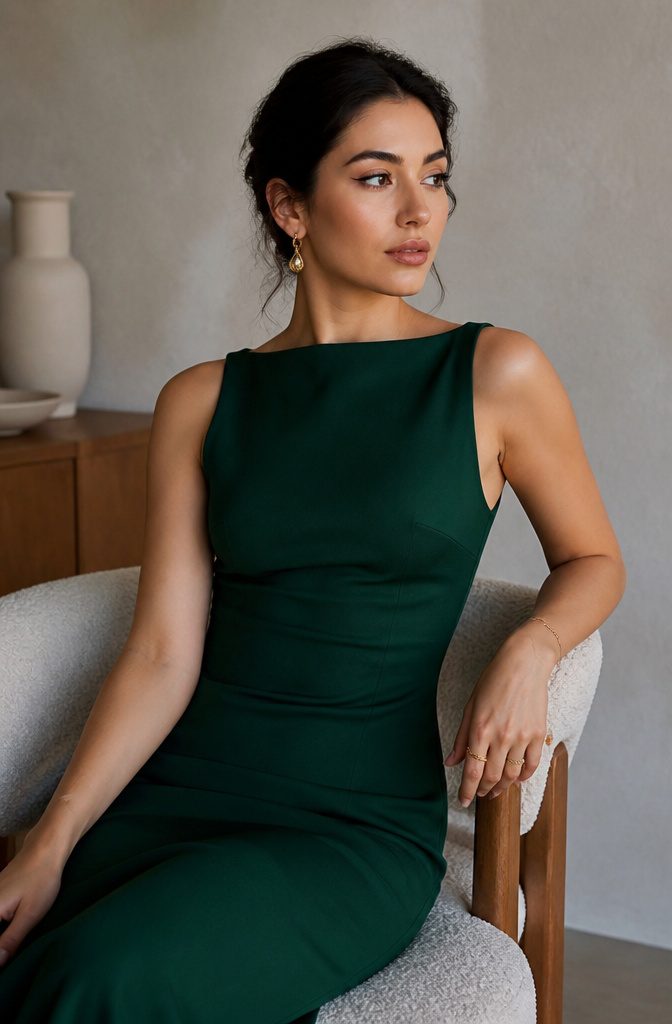
A minimalist green dress, clean-lined and quiet, asks for makeup that stays in its lane.
The face becomes a polished frame: a sharp cat-eye and a nude lip let the cut and color of the fabric do the talking. That balance feels intentional, not apologetic.
A bolder dress, one with volume or an arresting shade of green, invites the face to join the conversation.
A flick of colored liner or a shadow that picks up the dress’s vibrancy turns the whole look into a duet rather than a backdrop.
The choice of who leads comes down to where you want the first glance to land. When the dress cost the effort, let it.
When the night calls for someone to meet your eyes before they notice what you’re wearing, the face speaks first. Either way, a flawless base sets the stage; from there, eyes and lips play the part you assign them.
Jewelry That Works
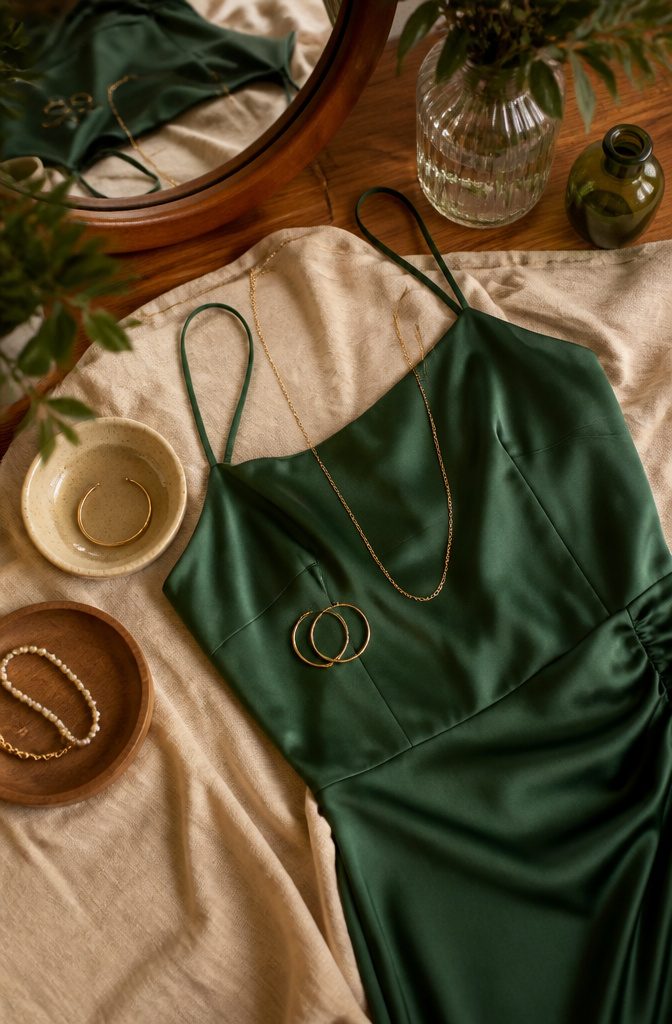
Gold against green reads expensive because it is: the warmth pulls out the yellow undertone in emerald or forest shades without shouting for attention.
A delicate gold chain or slim hoop earns its place when the makeup is doing the heavier lifting, say a smoked liner or a strong lip.
The balance flips when the face stays quiet. Then a single bold piece, a collar necklace with one clean gemstone or an intricate pendant, carries the whole look.
A simple cocktail ring in the same metal keeps the story coherent. I used to pile on bracelets with a green dress thinking more meant more dressed up, and the mirror showed me wrong: the eye had nowhere to land.
Now I choose one zone, wrist or neck or ears, and let the rest go silent.
Rose gold and silver can work, but they fight the dress where gold negotiates. If the makeup is the event, mute the jewelry to a whisper.
Hair to Frame It
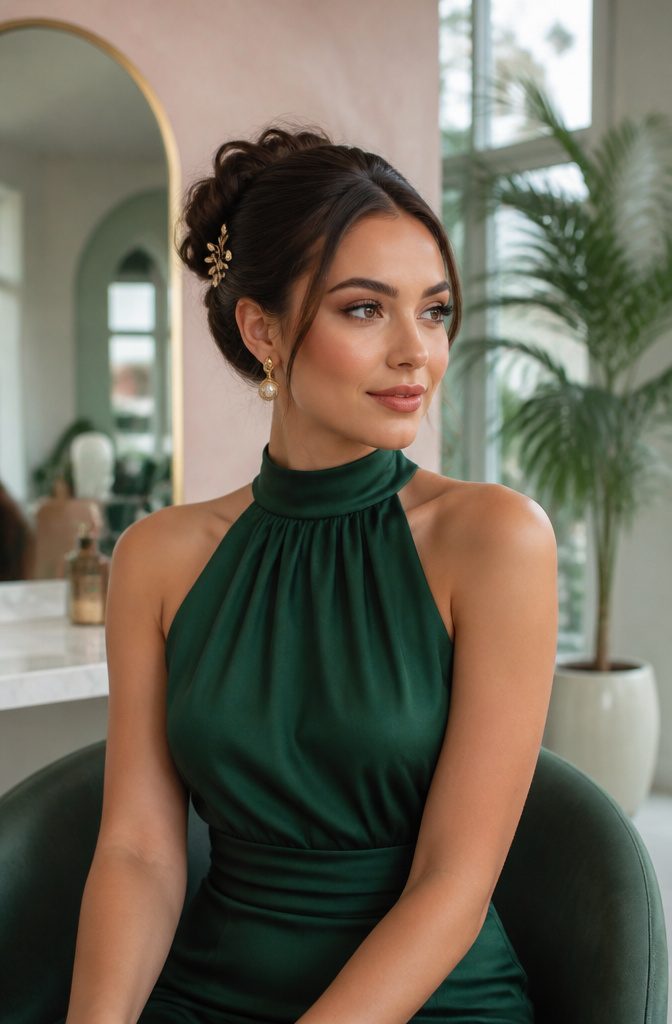
A sleek updo keeps the neck clear and lets a high neckline or statement earrings do their work without competition.
Soft waves, on the other hand, add volume around the face but can fight for attention if the makeup is already doing something dramatic.
The rule is: one element gets to be intricate, the others stay refined. I learned this the hard way with a green velvet dress and a pair of chandelier earrings.
The updo I planned fell flat halfway through the evening, and the waves I improvised were too much texture stacked against the earrings and a bold lip. The dress disappeared into the noise.
Now I decide before I dress: if the neckline is high or the earrings large, the hair stays smooth and pulled back. If the dress has a simpler cut and the jewelry is small, waves feel right.
Delicate hairpins work with either, but they read as an embellishment, not a rescue. The balance between hair and makeup is reciprocal.
Intricate detailing in one place demands simplicity in the other. Otherwise the green dress, which should anchor everything, becomes just another competing element.
Frequently Asked Questions
What kind of makeup goes with a green dress?
There is no single right look; the best makeup depends on the exact shade of green and the occasion.
Pale mint calls for barely-there skin and nude lips, while dark emerald pairs with bold burgundy lips and smoky eyes. The article breaks down eleven specific approaches for different greens and event types.
What colors should I avoid when wearing a green dress?
Skip orange entirely on lips and eyes, as it turns brassy against green and clashes under warm light. Handle blue carefully; mid-tone blues muddy against most greens unless the contrast is stark, like navy against lime.
Avoid matching your eyeshadow too closely to the dress, which dissolves the boundary between face and fabric into one flat block of color.
What makeup looks best with a dark green dress?
A bold lip in deep purple or burgundy gives your face the gravity to match the dress’s weight. For eyes, build a smoky look with black, gray, and silver.
The article notes that a whispered smoky eye can feel accidental beside a saturated dark green, so go rich enough that the makeup and dress are having the same conversation.


